“A way to reconnect with my body”: A conversation with Ainsley DS on Photography, Endometriosis, and Reclaiming the Body Through Storytelling
Shani Boyd,
#chronicpain
#endometriosis
#sexualhealth
#mentalhealth
#photography
Trigger warning: This article contains discussions of chronic illness, medical trauma, and mental health, including references to suicidal thoughts. Reader discretion is advised.
About Ainsley DS
 Ainsley DS is a photographer whose work sits at the intersection of embodiment, chronic illness, and storytelling. After beginning her career shooting in Paris, she has since turned her lens toward more intimate, documentary-style work, most notably through her Endo Empowerment Project, which centres the lived experiences of those with endometriosis and We Deserve Better, a project focused on improving gynaecological care in New Zealand. Her practice is grounded in trauma-informed care, collaboration, and a commitment to making invisible experiences visible.
From Paris to Purpose
Ainsley DS didn’t begin her photography career documenting chronic illness. In her twenties, she was living in Paris, shooting “romantic under the Eiffel Tower photo shoots with American couples,” work she describes as “really fun.” But something was missing. “I knew that it wasn't going to sustain my mental and emotional needs,” she says.
“I really wanted to do something that was… more impactful.”
That desire for meaning would eventually collide with her own experience of illness, reshaping not only her life, but her creative practice.
“It Was Very Invalidating”
Her diagnosis journey, like so many others with endometriosis, was marked by dismissal. A gynaecology appointment she attended stands out: “It was a complete waste of time. It was just very invalidating.” Two weeks later, she underwent an IUD insertion that she describes as “half an hour of being tortured,” an experience that left her with complex post-traumatic stress.
What followed was “years and years and years of not knowing what was wrong,” her body cycling through pain, infection, and chronic fatigue so severe she was “unable to do anything.”
The Body in Fight or Flight
Over time, Ainsley began to piece together a different understanding of her body; one rooted not just in diagnosis, but in trauma. “So much of my symptoms was just my body… in that fight or flight,” she explains. Learning to regulate her nervous system became a turning point:
“The next stage for me was learning how to calm everything down… and get my body out of that fight or flight system.”
A System That Doesn’t Know What to Do
But while her personal understanding deepened, her experiences within medical systems reflected a broader structural failure. “I think the most obvious answer is that it's because it's a woman's disease,” she says of endometriosis’ persistent misunderstanding. “Women's health is severely underfunded and under-researched.”
In emergency settings, she recalls, “they're sort of like, I don't know what to do with you… and therefore they don't really care.” Even more striking is the knowledge gap she encountered:
“I know more about the disease than [most doctors] do… which is insane considering how [common] the disease is.”
“What Doesn’t It Miss?”
The impact of this neglect extends far beyond physical symptoms. “What doesn’t it miss?” Ainsley says of healthcare’s limitations, pointing particularly to mental health. “The emotional and the mental impact is not taken seriously enough.”
For her, this isn’t abstract. “I know of multiple women who have chosen to end their life because they could not handle it anymore,” she says, reflecting on the severity of that reality, and her own experiences with suicidal thoughts.
It’s a stark reminder of how chronic pain, dismissal, and isolation can compound. She further emphasises on how care must extend beyond the physical. She emphasises the need for specialist support, highlighting the importance of psychologists who can help people“manage the extreme amount of pain and all the mental side effects that comes along with living in a disabled body.”
Learning to See Herself Again
Her relationship with her own body shifted dramatically alongside her illness. Once “very, very active,” constantly travelling and working, she found herself in a body she “didn’t recognise” after medication-related weight changes and physical decline.
“I would be in tears trying to get dressed,” she recalls. “I was in a body that couldn't function basically.”
Photography became a way to process that rupture. Through self-portraiture, she could “look at it… unobjectively,” creating distance between herself and internalised judgment.
But it was photographing others that catalysed a deeper shift: “If I think they're beautiful, then why don't I think I'm beautiful?”
Intimacy, Libido, and Reconnection
One of the most under-discussed impacts of endometriosis, Ainsley explains, is its effect on intimacy and sexuality. “I definitely don't feel as confident and as connected, especially on like the sexuality side of things,” she says. “My libido is just gone now.”
Layered onto this is stigma, a silence that makes these experiences harder to articulate and even harder to navigate. Sexuality is still so often framed through ideas of normalcy, desirability, and performance, leaving little room for bodies that are in pain, fatigued, or changing. For many, that creates an added sense of isolation, where struggles with intimacy feel like something to hide rather than something to work through.
Rather than forcing a return to a previous version of herself, Ainsley’s approach has been slower and more intentional.
“Trying to sort of come back to that and bring that back in in a gentle way… rather than like forcing it and pressuring yourself.”
This reflects a broader shift in how she relates to her body, away from expectation, and toward care. Reconnection isn’t linear, and it isn’t performative. It’s something that, like healing, “is definitely still a work in progress.”
Making the Invisible Visible
At the heart of her Endo Empowerment Project are storytelling and visibility. Endometriosis, she explains, exists in a paradox: “From the outside, you look absolutely fine. And on the inside, you're sitting there going, oh my god…[from severe pain]”
Her work aims to bridge that gap, to make the invisible visible, not just physically but emotionally.
By “highlighting the emotional and the mental impacts… and giving them a voice,” she creates space for recognition and connection.
The Healing Power of Being Seen
Connection, for many participants, is transformative. “It was so nice… to sit there with someone who just gets it,” she says.
“It was so healing and so motivating.”
In a condition often defined by isolation, these moments of shared understanding become a form of care in themselves.
A Trauma-Informed Lens
Her approach to photography reflects this ethos. Shoots are intentionally trauma-informed; collaborative, slow, and grounded in comfort. Participants are photographed in their own spaces, sometimes “in their pyjamas,” or with heat pads if needed.
“They know exactly what's happening,” she explains. “We just take it really slow.”
Within this space, vulnerability becomes something else entirely: agency.
Reclaiming the Body
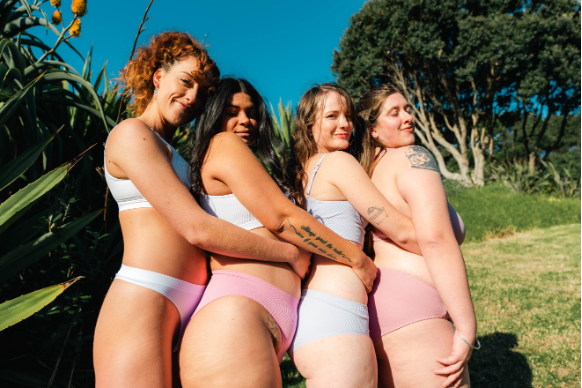
Nudity, often misunderstood in visual culture, plays a complex role in her work. It is not about performance, but about recognition and reconnection. It allows for the visibility of scars, of difference, of bodies that exist outside narrow ideals.
But it also facilitates something more visceral. There is, she describes, “this sort of switch”, a moment where participants move from discomfort into presence.
“All of a sudden they're like, oh, I'm naked in nature… it feels really natural and you feel really connected.”
Disconnection and Return
That connection, to the body, to others and to environment, is central to her understanding of healing. Because endometriosis doesn’t just create pain; it creates disconnection. During severe flares, she explains, “you disassociate to survive.”
Reconnection, then, is not immediate but rather part of a wider journey.
Living With Unpredictability
Living and working within that unpredictability requires constant negotiation. Plans are made and cancelled; energy is carefully rationed. “I have no control. It's not my choice,” she says.
Letting go of guilt has been essential: “I'm not going to feel guilty about it.”
Finding What Helps
Support, she emphasises, comes from a combination of approaches. Medical, emotional, and community-based. Medical cannabis*, in particular, has been “one of the biggest helpers,” offering relief without the side effects of other medications.
But equally important is something less tangible: permission to rest. “Taking the guilt and the pressure off… was a huge thing,” she says. “I could actually calm my body down.”
*Cannabis should only be used under the guidance of a qualified healthcare professional and in accordance with local laws.
Creativity as Therapy and Activism
Ainsley’s work exists at the intersection of personal experience and collective resistance. Creativity is, as she puts it, is “definitely both, 100% both” therapy and activism.
It is healing: “a huge part of my healing process.”
And it is defiance:
“this middle finger to the beauty standards… to me, that's activism in itself.”
“We Deserve Better”
Her advocacy extends beyond art. Through her wider work, she is pushing for trauma-informed care in gynaecology, something she says “just does not exist.”
What she has witnessed is unacceptable: “We have women… coming out traumatised… it causes much more harm than good.” The system, she says, is “absolutely barbaric.”
Collective Storytelling, Collective Power
But perhaps the most powerful aspect of her work is its insistence on visibility not as spectacle, but as solidarity. By centring shared stories, she reframes endometriosis not as an individual struggle, but a collective one.
“It’s like the journeys are different,” she reflects, “but they all consist of the same obstacles.”
And in telling those stories, she is not just documenting pain, she is reshaping how it is seen, understood, and held.
Thank you so much Ainsley for sharing your time, your journey and your work with us!
Where to find Ainsley:
website:
https://www.ainsleydscreative.com
instagram:
UK Support resources:
Wellbeing of Women
Period Symptom Checker
Endometriosis UK
Information, helpline, and peer support
Helpline available 0808 808 2227
Pain being common does not mean it is normal.
Mental Health Support:
If you’re struggling emotionally, you are not alone.
Samaritans (24/7 support)
Helpline: 116 123
Shout (24/7 text support)
Text SHOUT to 85258
The Mix (under 25s)
Text 85258 for urgent mental health support
Childline (under 18s)
Helpline: 0800 1111
You don’t need to be in crisis to ask for help.
Share your thoughts
We're on a mission to bring our community the best content! Loved this article? Got ideas to make it even better or suggestions for future topics? We'd love to hear from you! Your input shapes the future of our content.