"There's no right way to feel": A conversation with Dr Victoria Browne on why pregnancy endings need a feminist rethink
Shani Boyd,
#pregnancyendings
#miscarriage
#reproductivejustice
#abortion
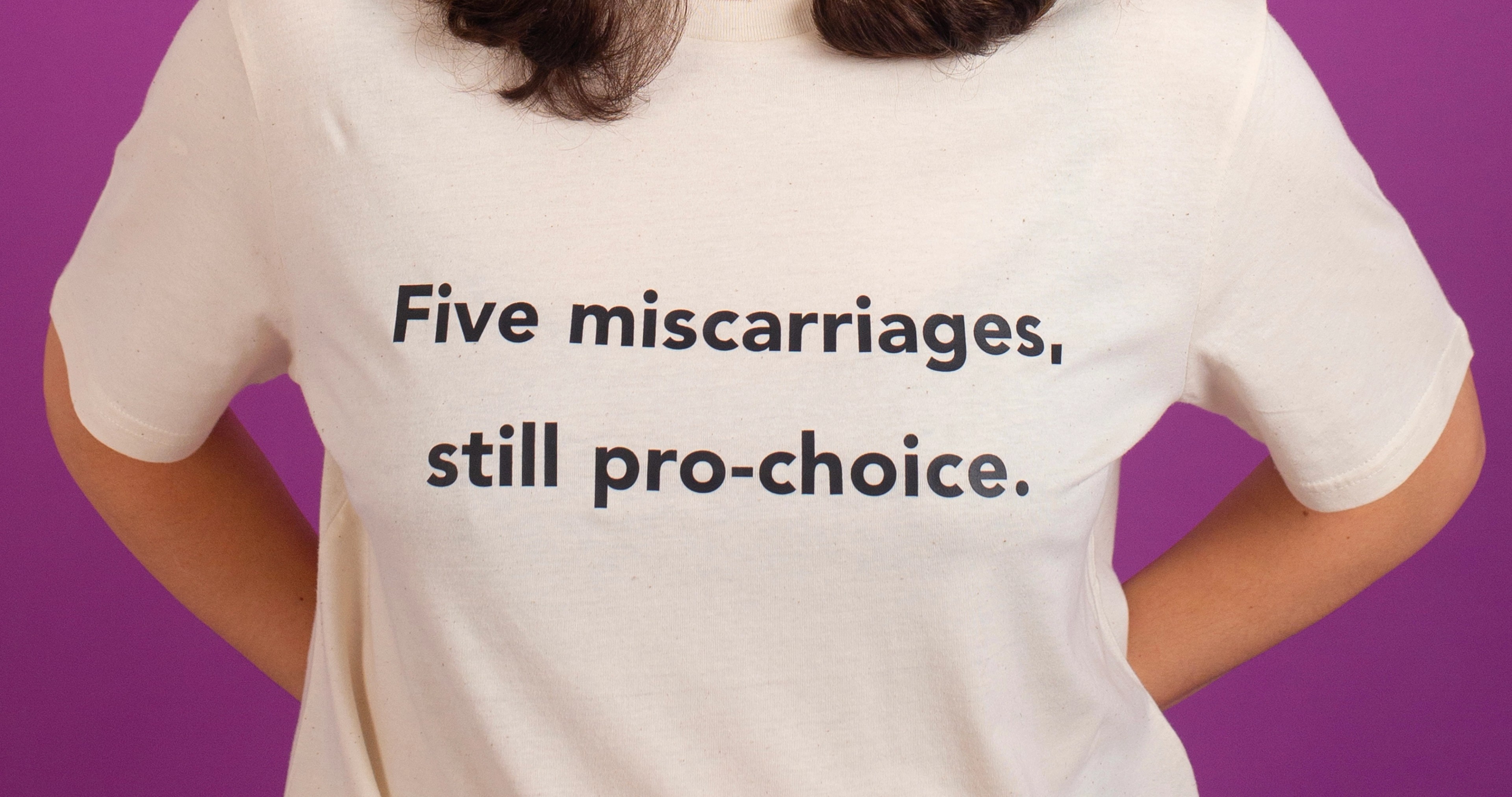
Trigger warning: This article discusses pregnancy endings including miscarriage and abortion.
 Dr Victoria Browne is a Reader in Political Philosophy at Loughborough University, whose research explores miscarriage, reproductive justice and feminist political theory. She is the co-founder of the Feminist Miscarriage Project, an interdisciplinary initiative challenging dominant narratives around pregnancy endings by centring intersectionality, reproductive justice and the diverse realities of miscarriage. Dr Browne is also the author of Pregnancy Without Birth: A Feminist Philosophy of Miscarriage, which examines miscarriage through the lenses of philosophy, politics and lived experience.
Miscarriage is no longer the silent subject it once was.
Over the last decade, celebrities have spoken publicly about pregnancy loss, awareness campaigns have proliferated, and social media has become a space where people share deeply personal experiences that previous generations often kept private. For many, this growing visibility has been transformative.
However, Dr Browne’s work takes a wider look at whose stories stories may still be lost.
"We've started talking much more about miscarriage…But we've also started talking about it in ways that can become quite constraining."
For Dr Browne, the issue isn't that miscarriage is increasingly recognised as devastating. It undoubtedly is for many people. The problem is that one narrative has begun to dominate public understanding, the idea that miscarriage is always experienced as the tragic loss of a baby, and that this can unintentionally exclude countless other experiences.
The Feminist Miscarriage Project was created to challenge that narrowing of the conversation.
Rather than asking people to fit their experiences into a predetermined narrative, Dr Browne and co-founder Professor Susie Kilshaw, a feminist anthropologist at University College London, want miscarriage to be understood as something socially, politically and emotionally complex.
Their work asks uncomfortable but important questions: Who gets represented when we talk about miscarriage? Whose stories remain invisible? How do race, disability, poverty and immigration status shape pregnancy loss? And what happens when miscarriage is separated from wider conversations about abortion and reproductive justice?
From silence to a single narrative
When Dr Browne first began researching miscarriage around 2013, she found surprisingly little academic work devoted to the subject.
"It really wasn't discussed very much," she says. "Not in academic research, but also not within the public sphere."
That landscape has changed dramatically.
High-profile disclosures from celebrities have helped normalise conversations around pregnancy loss. Dr Browne sees genuine value in these moments. Public figures can create what journalist Jennie Agg describes as an opening for others to speak; a permission structure that encourages people to share experiences they may previously have hidden.
"It gives a sense of permission, if people think ‘If this revered person can talk about it, then why can't I?’"
Yet celebrity culture also has limits.
Most public miscarriage narratives come from relatively privileged women, often white, financially secure and with access to high-quality healthcare. While these stories deserve attention, Dr Browne argues they risk distorting public understanding because they do not reflect the broader social reality.
Statistically, miscarriage rates are higher among more marginalised communities. Yet those experiences remain comparatively absent from public discussion.
"The spotlight stays on the very privileged," Dr Browne explains, "when actually it's less privileged groups who are more likely to experience miscarriage."
The consequences extend beyond representation.
When discussions focus primarily on emotionally intimate stories from celebrities, miscarriage becomes framed largely as an individual emotional event rather than one shaped by wider structural inequalities.
Someone on a zero-hours contract may feel compelled to return to work while actively miscarrying because they cannot afford unpaid leave. Someone newly arrived in the UK may have no access to public funds. Others may face insecure housing, food insecurity or barriers to healthcare.
These realities rarely feature in celebrity interviews.
"What people need isn't always just emotional support," Dr Browne says. "Sometimes it's material support."
“The Full Spectrum Approach”
One of the Feminist Miscarriage Project's central aims is what Dr Browne calls a full-spectrum approach to miscarriage.
This means recognising the extraordinary diversity of people's emotional responses.
Many experience profound grief. Others feel sadness mixed with relief. Some experience ambivalence. Others simply feel exhausted, confused or emotionally detached.
All of these experiences are valid.
"The danger," Dr Browne says, "is if miscarriage automatically becomes framed as bereavement."
Anthropological research by Susie Kilshaw illustrates the problem. Some participants described encountering messaging that repeatedly told them miscarriage causes devastating grief. Because they did not personally feel bereaved, they began questioning themselves instead.
"'Am I having the right reaction?'"
"'Is there something wrong with me?'"
"'Am I a terrible person?'"
Instead of reducing shame, a single dominant narrative can create new forms of shame for people whose experiences fall outside it.
Support services can unintentionally reinforce this.
If miscarriage support is presented exclusively through bereavement counselling, people who do not identify as grieving may conclude that support simply is not meant for them.
Yet miscarriage can involve severe physical pain, hormonal shifts, uncertainty, workplace difficulties and medical trauma regardless of whether someone feels bereaved.
"You might still need support," Dr Browne says. "Just not bereavement support."
The politics of language
Language plays a surprisingly powerful role in shaping miscarriage care.
Dr Browne describes research participants whose healthcare professionals repeatedly referred to "the baby", called them "mum" or assumed they were grieving parents.
For some patients, those words are deeply validating.
For others, they can feel profoundly alienating.
Healthcare professionals, Dr Browne believes, often adopt this language because they are trying to be compassionate. But compassion requires flexibility rather than assumption.
"The key message would be [to have] zero assumptions."
Rather than imposing particular meanings onto pregnancy loss, clinicians should take their cue from the individual sitting in front of them.
"The language should come from the person who needs the care."
This flexibility also matters politically.
As a feminist philosopher, Dr Browne has become increasingly concerned that miscarriage discourse sometimes mirrors language used by anti-abortion movements, particularly when pregnancy is automatically framed as involving an unborn baby whose loss must always be mourned.
For Dr Browne, recognising grief should never require imposing it.
Why miscarriage and abortion belong in the same conversation
Another interesting part of our discussion focused on how in our current political landscape miscarriage and abortion cannot be meaningfully separated.
Historically, both movements have often preferred distance.
Some abortion advocates have worried that talking about miscarriage as loss may inadvertently strengthen anti-abortion arguments by acknowledging emotional value in pregnancies.
Meanwhile, miscarriage organisations have often avoided abortion because of stigma, funding concerns or fears of alienating supporters.
Dr Browne understands both positions.
"But in reality," she says, "they're impossible to separate."
Clinically, miscarriage and abortion frequently involve the same medications and the same surgical procedures.
Politically, the connections are becoming increasingly visible.
Following the overturning of Roe v. Wade in the United States, women experiencing miscarriages have been investigated, arrested and prosecuted after pregnancy losses were deemed suspicious. Internet search histories have been scrutinised. Pregnancy remains found after miscarriages have triggered police involvement.
Although these cases occur within the context of restrictive abortion laws, Dr Browne argues their consequences extend far beyond abortion.
"As long as anti-abortion laws exist," she says, "they inevitably affect all pregnancy endings."
The same stigma that surrounds abortion also shapes miscarriage.
This is why one of the Feminist Miscarriage Project's core objectives is to create what Dr Browne describes as an explicitly pro-abortion feminist space for talking about miscarriage.
Feminism beyond the individual
The project's emphasis on feminism is deliberate.
Dr Browne distinguishes their approach from models that focus solely on individual patient experience.
Individual stories matter enormously, she says, but feminist storytelling has historically served another purpose.
"It isn't just about expressing individual identity."
Instead, storytelling allows people to identify recurring patterns, recognise shared inequalities and build collective action.
This tradition has deep roots within feminist movements, where consciousness-raising groups transformed apparently private problems into political ones.
Rather than viewing miscarriage as isolated “bad luck”, Dr Browne wants it understood within broader systems of healthcare, employment, housing and social policy.
"We have to think about the bigger communities and social structures we're living within."
Rethinking reproductive justice
One of Dr Browne's own intellectual journeys reflects this broader perspective.
When she first became interested in miscarriage, she approached it through existential philosophy.
Reading classic existential thinkers, most of whom were men, she became struck by how reproduction was portrayed as a seamless process: conception, pregnancy, birth and life.
Miscarriage barely appeared.
"It seemed like something really important was missing."
Over time, however, Dr Browne's thinking shifted away from existential philosophy towards reproductive justice.
The reproductive justice movement, developed by Black feminists including Loretta Ross, argues that reproductive freedom cannot be separated from wider questions of economic inequality, racism, housing, healthcare and social justice.
That framework fundamentally changed how Dr Browne understood miscarriage.
Rather than seeing it primarily as an existential question about life and death, she began understanding it as a political issue shaped by structural inequality.
"Reproductive justice brings together reproductive politics and social justice."
This shift also explains why the Feminist Miscarriage Project places such emphasis on intersectionality.
The missing stories
Academic research itself reflects social inequalities.
Many miscarriage studies rely on recruitment methods that disproportionately reach white, middle-class participants. Advocacy organisations often attract people whose experiences align with their own messaging, meaning surveys can unintentionally reinforce particular narratives while excluding others.
As Dr Browne points out, this is not unique to miscarriage research. It reflects broader methodological challenges across sociology and anthropology.
Yet the consequences matter.
If miscarriage is viewed simply as personal misfortune, researchers may never ask how poverty, racism or disability shape pregnancy loss.
In reality, people facing insecure housing, unsafe working conditions, poor nutrition or limited healthcare access often face increased miscarriage risk.
Viewing miscarriage through an intersectional lens therefore changes the questions we ask.
It moves the conversation beyond individual coping towards prevention, public health and social justice.
"Miscarriage isn't just a feminist issue," Dr Browne says. "It's a feminist social justice issue."
Waiting rooms tell their own story
Some of the interview's most revealing moments came when discussing hospital waiting rooms.
As someone living with endometriosis, I described spending time in ultrasound departments where patients experiencing infertility, miscarriage, abortion, pregnancy complications and chronic gynaecological conditions all occupy the same physical spaces.
Dr Browne immediately recognised the significance.
"The waiting room comes up in so many conversations."
Research consistently finds that people experiencing miscarriage often find it deeply distressing to sit alongside heavily pregnant patients or hear babies crying while awaiting treatment.
Yet these environments are rarely questioned.
Instead, miscarriage remains routed through maternity services because pregnancy loss is assumed to belong there.
Dr Browne suggests we need to rethink these assumptions.
People experiencing miscarriage may actually share more practical experiences with those undergoing abortions than with patients attending routine antenatal appointments.
But chronic underfunding within the NHS leaves little opportunity to design healthcare environments that acknowledge these different realities.
The physical spaces themselves become another reflection of how narrowly pregnancy endings are understood.
There's no right way to feel
Towards the end of our conversation, I asked Dr Browne what she hopes people who have experienced miscarriage take away from her work.
She paused before answering.
"I think the first thing would be that there's no right way to feel."
Those words encapsulate the Feminist Miscarriage Project's wider philosophy.
Its goal is not to replace one dominant narrative with another.
It is to create enough space for grief and relief, devastation and ambivalence, politics and personal experience, while recognising that all are shaped by broader systems of inequality.
Perhaps most importantly, Dr Browne wants people to know that feminism has room for every one of those experiences.
"Good feminism," she says with a smile, "has a space for you."
Thank you so much Victoria for sharing your time and mission with us!
Where to find Dr Victoria Browne:
https://www.lboro.ac.uk/subjects/politics-international-studies/staff/victoria-browne/
Feminist Miscarriage Project:
https://feministmiscarriageproject.org/
https://www.instagram.com/feministmiscarriageproject/
The Vagina Museum
Arches 275–276 Poyser Street
London
E2 9RF
Support resources for pregnancy, birth, miscarriage, and postnatal mental health:
Tommy’s – pregnancy & baby loss support
PANDAS Foundation – postnatal depression & anxiety
Birth Trauma Association – birth trauma support
Mental Health Support:
If you’re struggling emotionally, you are not alone.
Samaritans (24/7 support)
Helpline: 116 123
Shout (24/7 text support)
Text SHOUT to 85258
The Mix (under 25s)
Text 85258 for urgent mental health support
Childline (under 18s)
Helpline: 0800 1111
You don’t need to be in crisis to ask for help.
Share your thoughts
We're on a mission to bring our community the best content! Loved this article? Got ideas to make it even better or suggestions for future topics? We'd love to hear from you! Your input shapes the future of our content.